Limited Quantity vs Excepted Quantity
Two HazMat shipping exceptions, two very different rule sets. This page lays out the quantity limits, packaging requirements, markings, and decision logic side-by-side — with the regulatory citations and real UN-numbered examples.

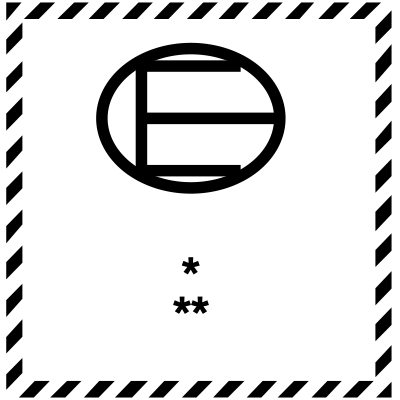
Most regulated HazMat shipments require UN-specification packaging, full shipping papers, placards on the transport vehicle, and complete marking and labeling. The U.S. Department of Transportation and the international community recognize, however, that very small quantities of many materials present substantially reduced risk. To avoid a system in which a one-ounce sample carries the same paperwork as a 55-gallon drum, the regulations build in two tiered exceptions: Limited Quantity (LQ) and Excepted Quantity (EQ).
Both are written into 49 CFR and harmonized internationally through the IATA DGR (air) and the IMDG Code (sea). Both reduce — but never eliminate — the regulatory burden. Picking the right one (or knowing when neither applies) determines what packaging you buy, what marks go on the box, what training your team needs, and ultimately how much each shipment costs.
The decision is not interchangeable. LQ allows more material per package but uses simpler packaging. EQ allows less material per package but demands certified drop and stack testing. Each UN-numbered material is independently assigned an EQ code (E0 through E5) and may or may not be eligible for LQ — both are looked up in the Hazardous Materials Table in 49 CFR §172.101.
Limited Quantity (LQ)
A regulatory exception that permits small quantities of hazardous materials to ship with reduced packaging, marking, and documentation requirements. LQ is the more common of the two — it's the exception most consumer products with embedded HazMat (paint, alcohol, lithium-battery-equipped devices, aerosols) move under.
| Inner packaging limit | Typically 1 L (liquids) or 5 kg (solids) per inner. Exact limit varies by class; see the §173.150 series. |
|---|---|
| Outer package limit | 30 kg gross per package for ground / vessel. 30 kg "Y" for cargo aircraft; passenger aircraft has tighter limits per IATA. |
| Packaging type | Combination packaging required (inner packagings inside an outer box). Single packagings generally not permitted under LQ. |
| Performance testing | No UN performance certification required. Outer package must withstand a 1.2 m drop test. |
| Mark required on package | The LQ square-on-point mark (black on white). For air shipments, the mark includes a "Y" inside the white band. |
| Shipping papers | Generally not required for ground / rail. Required for air and vessel, with reduced content. |
| Placards on vehicle | Not required. LQ shipments are excepted from placarding. |
| Training | Required. 49 CFR §172.704 applies. LQ does not exempt the shipper from HazMat training. |
Classes generally not eligible for LQ
| Class 1 | Explosives — not permitted. |
| Class 2.3 | Toxic Gas — not permitted. |
| Class 4.1 self-reactive | Not permitted. |
| Class 4.2 PG I | Not permitted (PG II and III may be allowed). |
| Class 4.3 PG I | Not permitted. |
| Class 5.1 PG I | Not permitted. |
| Class 5.2 | Most organic peroxides — not permitted. |
| Class 6.1 PG I (inhalation) | Not permitted. |
| Class 6.2 | Infectious — not permitted (uses separate exception system). |
| Class 7 | Radioactive — not permitted (uses Excepted Package system under §173.421). |
Excepted Quantity (EQ)
A tighter exception for very small quantities — typically grams and milliliters, not liters and kilograms. EQ shipments are almost fully exempt from the HazMat regulations (no placards, no shipping paper, in many cases no Dangerous Goods declaration for air) but the packaging must pass specific drop and stack tests, and the rules cap the number of packages per transport vehicle.
The E-code system
Each UN entry in the Hazardous Materials Table is assigned an Excepted Quantity code in column 8A. The code dictates the maximum quantity per inner and per outer packaging.
| Code | Inner packaging | Outer packaging |
|---|---|---|
| E0 | Excepted Quantities not permitted for this material. | |
| E1 | 30 g or 30 mL | 1 kg or 1 L |
| E2 | 30 g or 30 mL | 500 g or 500 mL |
| E3 | 30 g or 30 mL | 300 g or 300 mL |
| E4 | 1 g or 1 mL | 500 g or 500 mL |
| E5 | 1 g or 1 mL | 300 g or 300 mL |
Packaging requirements
| Packaging type | Three-layer system required: inner packaging, intermediate packaging with absorbent (for liquids), and rigid outer packaging. |
|---|---|
| Drop test | 1.8 m drop onto a rigid target, six different orientations. No leakage permitted. |
| Stack test | 24-hour stacking at a load of 3 × the package mass. No deterioration permitted. |
| Outer package limit | 30 kg gross per package. |
| Per-vehicle limit | 1,000 packages maximum per transport vehicle. Strict. |
| Mark required on package | The EQ mark — a square with diagonal red hatched border, class number(s) shown in center, plus shipper or consignee name. |
| Shipping papers | Not required for ground in most cases. Air and vessel modes have specific requirements; check IATA / IMDG. |
| Placards on vehicle | Not required. |
| Training | Required. §172.704 applies. |
EQ codes shown above are illustrative. Always verify the current EQ code in 49 CFR §172.101 column 8A or the IATA DGR.
Direct comparison
| Limited Quantity | Excepted Quantity | |
|---|---|---|
| Citation | 49 CFR §173.150–§173.156 | 49 CFR §173.4a |
| Inner limit | ~1 L liquid / 5 kg solid (class-dependent) | 1–30 g/mL (per E-code) |
| Outer limit | 30 kg gross | 300 g – 1 kg (per E-code), 30 kg gross max |
| Packaging | Combination (inner + outer). No UN cert required. | 3-layer system. Drop + stack tested. |
| Marking | LQ square-on-point (black/white) | EQ square (red hatched border) + class + shipper name |
| Shipping papers | Mostly exempt (ground/rail); required for air/vessel | Mostly exempt; check air/vessel rules |
| Placards | Not required | Not required |
| Per-vehicle cap | No package-count limit | 1,000 packages maximum |
| Best for | Consumer products with embedded HazMat, retail-quantity chemicals, aerosols | Lab reagents, analytical samples, R&D quantities, specialty chemistry |
Which exception applies?
Work through these questions in order. The first "no" pushes you to the next option down.
Ground, air, and sea handle these differently
The exceptions exist in all three modal regulations, but the details — quantity limits, marking variants, and documentation — diverge meaningfully.
Where shippers most often get cited
1. Treating the exception as a documentation waiver
LQ and EQ reduce paperwork and marking — they do not waive training, segregation rules in the warehouse, or the requirement to have basic emergency response information available. PHMSA cites this regularly.
2. Using the wrong mark
The LQ mark and the EQ mark are different shapes, different colors, and not interchangeable. Putting an LQ mark on an EQ shipment (or vice versa) is a marking violation. Pre-2015 LQ marks (with class number inside) are obsolete and should not be reused.
3. Mis-summing inner packagings
The inner limit is per inner packaging, not per box. Six 30-mL inners in one outer is fine under E2 if the total is ≤500 mL — but seven 30-mL inners (210 mL) is also fine; what you cannot do is put a single 60-mL inner in there, because it exceeds the per-inner limit.
4. Forgetting the per-vehicle cap on EQ
EQ allows 1,000 packages per transport vehicle. For ground LTL freight where multiple shippers consolidate, the carrier — not you — is enforcing this limit, and they will refuse loads that breach it.
5. Assuming lithium batteries qualify
They don't ship under either standard exception. Lithium batteries use a dedicated exception framework under UN3480 (Lithium-Ion Batteries), UN3481 (Lithium-Ion in or with Equipment), UN3090 (Lithium Metal), and UN3091, governed by 49 CFR §173.185 and the IATA Lithium Battery Guidance Document. Different rules entirely.
Common questions
UNLookup is a reference utility. This page summarizes the Limited Quantity and Excepted Quantity exceptions under 49 CFR and references the IATA DGR and IMDG Code for modal differences. It is not a substitute for current editions of those regulations. Quantity limits, EQ codes, packaging requirements, and class exclusions are subject to amendment — always verify against the official source applicable to your shipment and mode of transport before tendering a shipment. The EQ mark and LQ mark shown above are stylized representations; the exact specification appears in 49 CFR §172.315 and §173.4a respectively.